

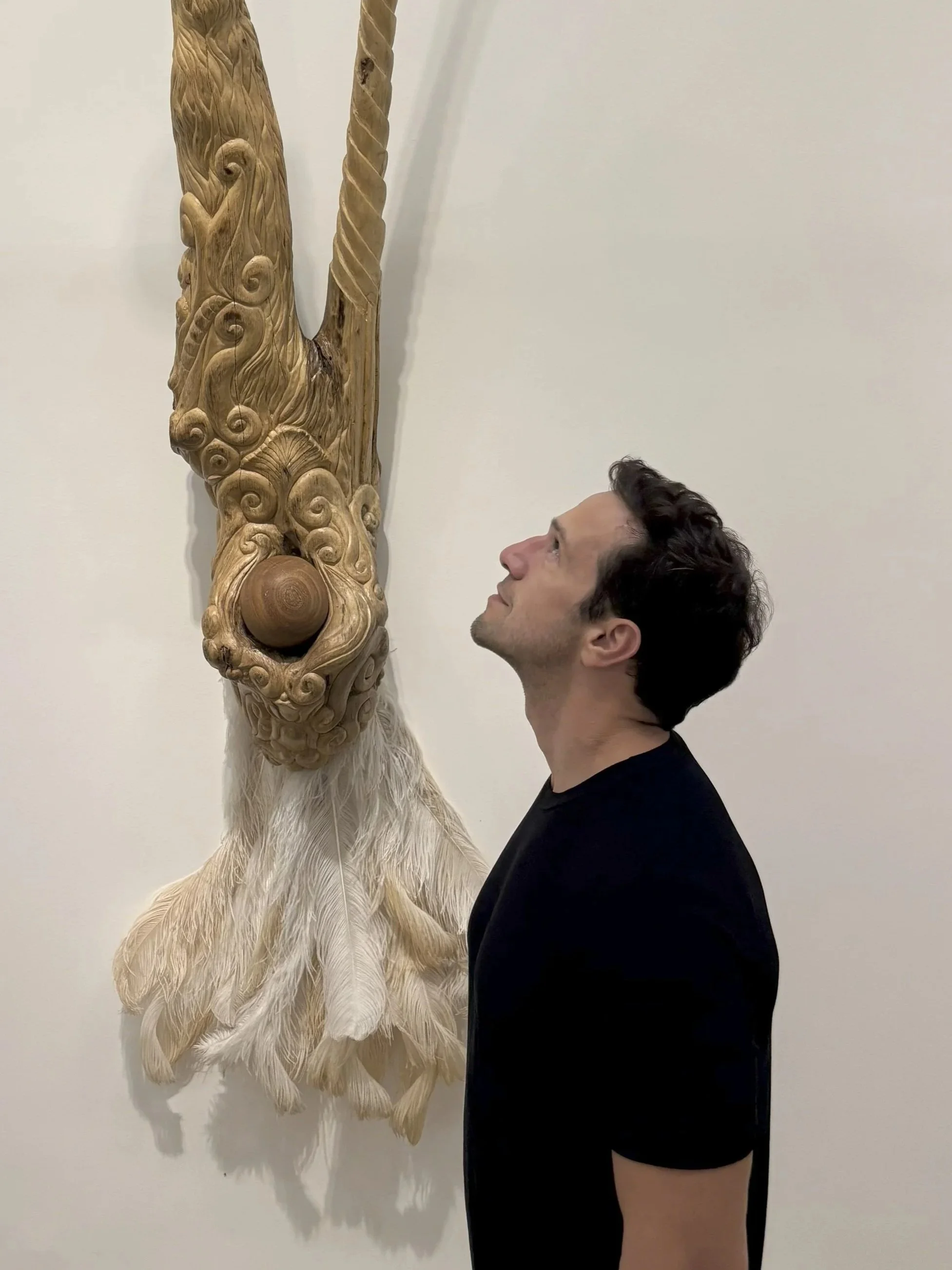
THE WEIGHT OF MEANING: A Conversation with José Seronni
What struck me the most about speaking with José Seronni was the way he makes collecting feel less like an act of possession and more like a form of care. Seronni, who lives in Goiania, Brazil, doesn’t talk about his collection in terms of prestige or investment. Instead, he speaks of memory, community, and history—as if each artwork he acquires is another thread in a fabric he’s been weaving for years.
“To me, collecting art is a way of giving life deeper meaning,” he told me. “It nourishes my soul, enriches my humanity, and connects me to the themes and emotions that truly matter to me.” His collection didn’t start with a grand plan. “At first, my collection was built around artworks I acquired during my travels—almost like memories of the places I had been and the moments I had lived,” Seronni said. But something shifted. The further he traveled, the clearer it became that his collection could do more than recall places—it could honor stories that history often neglects. “I became involved with the local cultural scene, supporting emerging artists and committing myself to social justice, especially by uplifting marginalized, Black, and LGBTQIA+ voices,” he said.
By Arlo Jake Lagmay
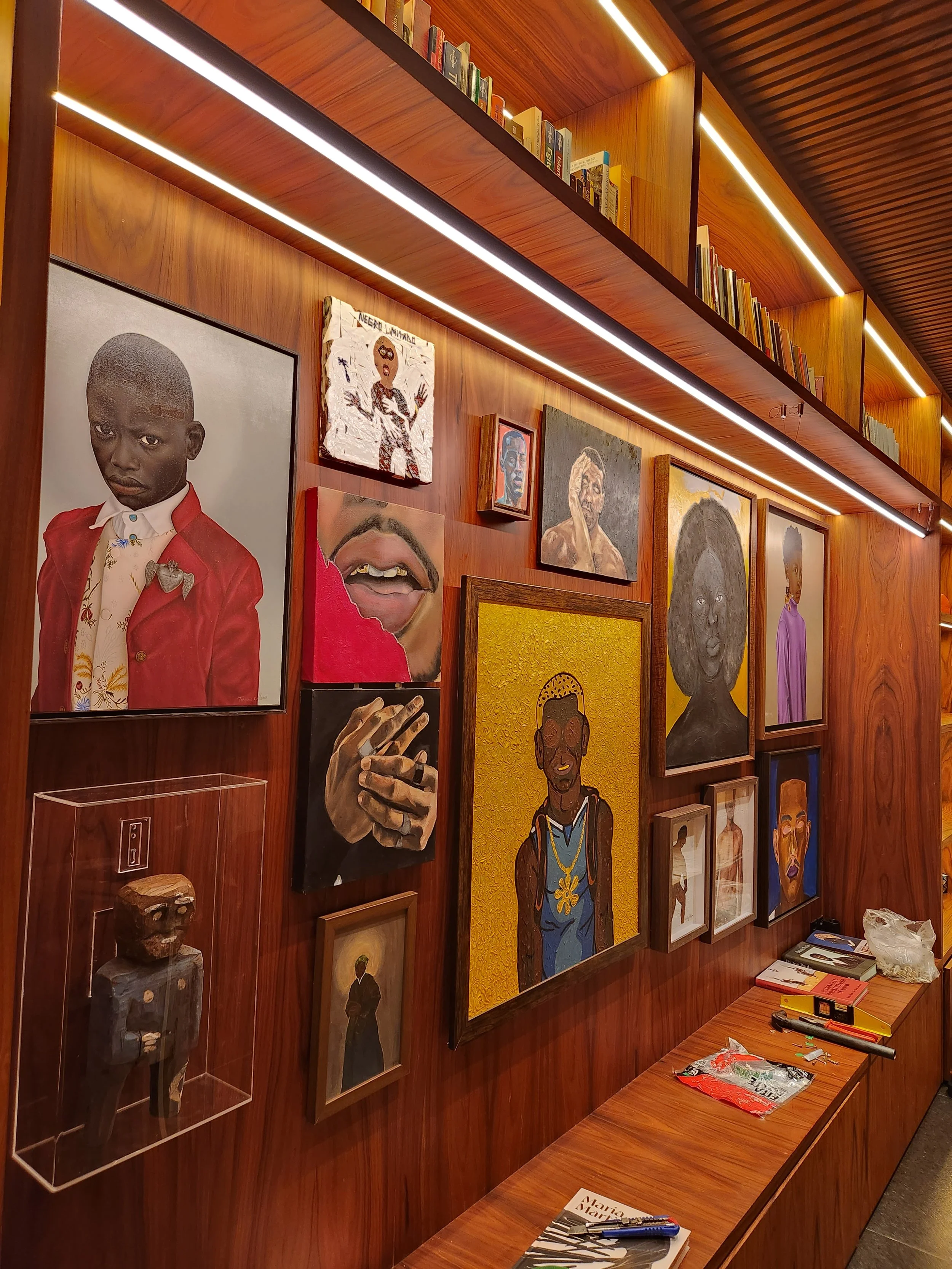
“To me, collecting art is a way of giving life deeper meaning,” he told me. “It nourishes my soul, enriches my humanity, and connects me to the themes and emotions that truly matter to me.”
More recently, environmental themes have entered his collection. “Environmental concerns now find their way into my acquisitions, reflecting a growing resonance within me,” he said. It’s a quiet evolution, but purposeful. When he chooses a piece, he listens for something beyond aesthetic appeal. “Above all, it’s the way a piece stirs something within me—how it moves me and brings a deeper sense of meaning to my life,” he explained. “But I’m also deeply interested in the journey behind each piece: the artist’s research, their personal story, and the intentions that shape their creative expression.”
Seronni sees himself as a collector of his time and his region. He says, “While I do have works by artists from other places, I make it a point to play an active role in the cultural life of the city and region where I live.” That role extends beyond collecting: funding exhibitions, backing student projects, granting scholarships, and creating residencies.
He is also drawn to artists whose names were overlooked. “It’s not just about what’s new—it’s also about what was missed,” he said.
His friendship with Brazilian artist Dalton Paula is a testament to that ethos. “I met Dalton in 2022, the year he began the activities of Sertão Negro—an atelier and school of arts,” Seronni recalled. Paula’s work deeply resonates with him. “He rescues and reconstructs Afro-Brazilian memory by giving visibility to Black historical figures who were erased or neglected by official historiography.” Seronni admires how Paula’s work expands beyond one community. “He impacts the place where he is rooted and expands that transformation to other territories, reaching artists, educators, and all those whose paths are touched by his work.”
He keeps a sharp focus on emerging artists. “Young and emerging artists are the leading thinkers of their time. They are the ones most attuned to the themes, emotions, and questions that define our era,” Seronni said. Supporting them is not just a moral gesture to him, but a necessity. “It’s fundamental to building a more sustainable art world—one where both artists and collectors can grow together with deeper purpose.”
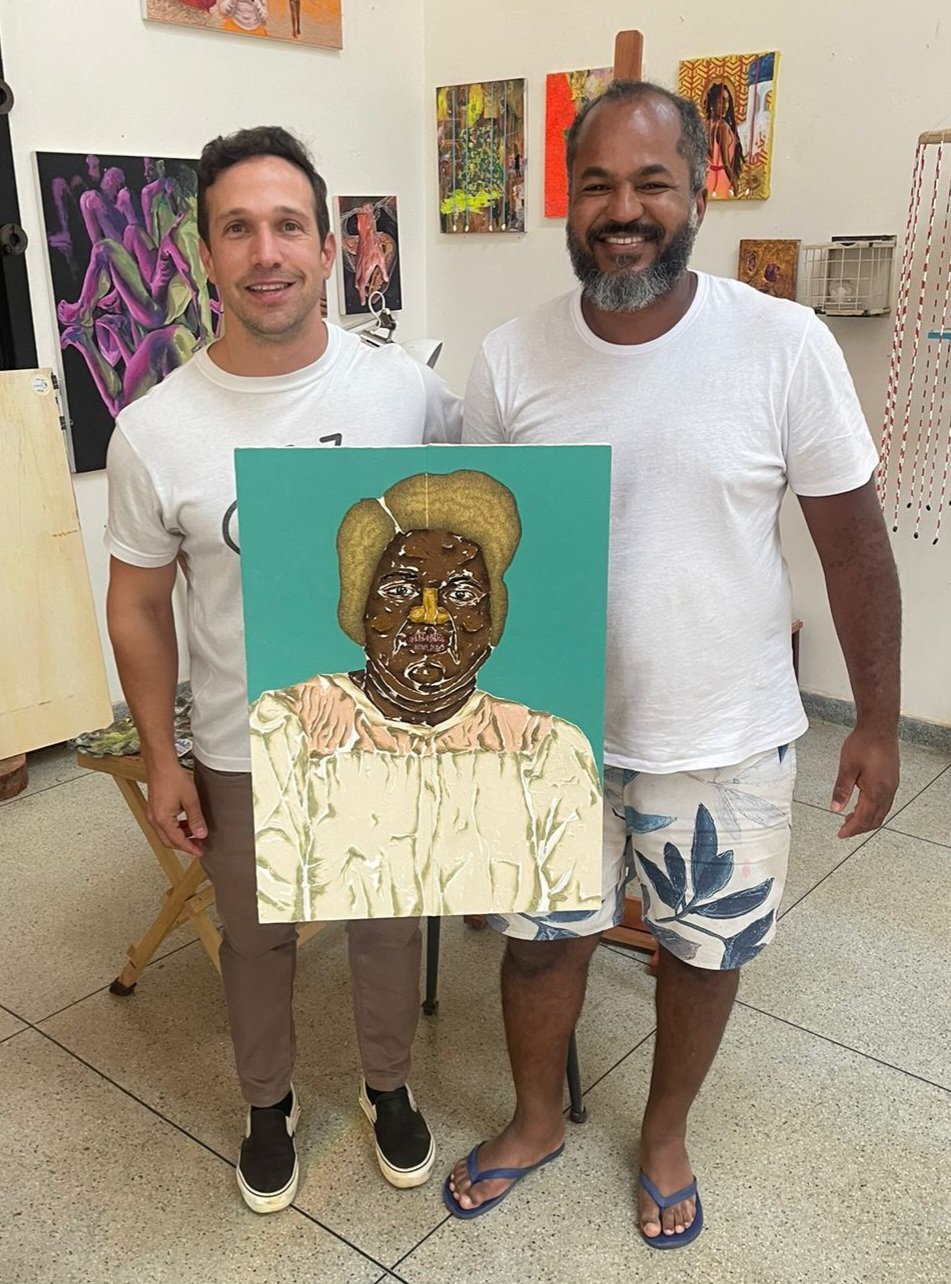
Dalton Paula with Jose Seronni
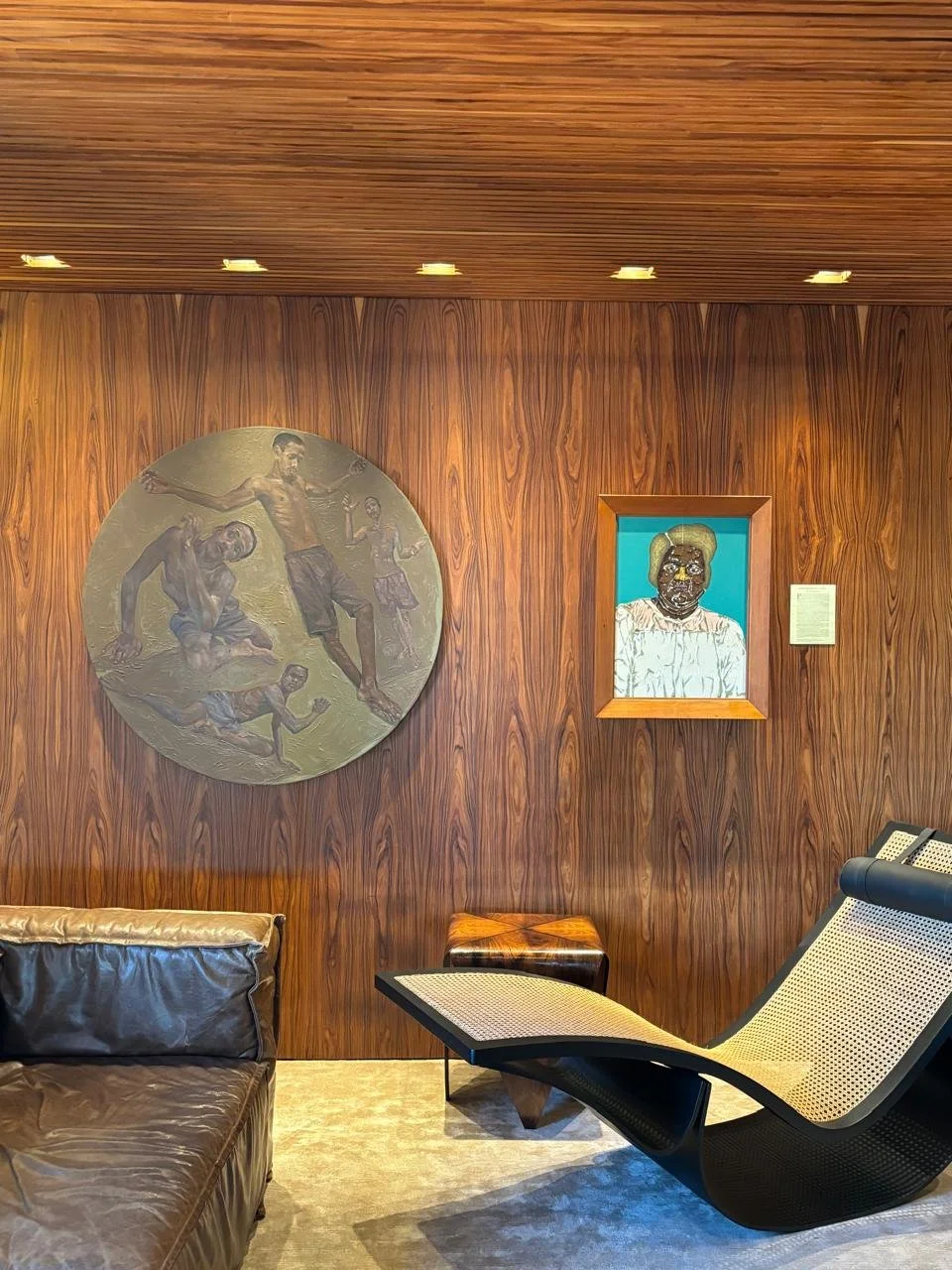
When I asked him where he sees the artworld heading, Serroni was cautiously optimistic. “The past five years have brought meaningful change,” he reflected. “There’s a growing appreciation for artists from the Global South and from minority groups. I hope this recognition continues to grow stronger—and more meaningful—with time.” And yet, he’s not naive. He knows the gatekeepers still hold power. But he remains steadfast. “Collecting, for me, is not about status. It’s about stewardship,” he said.
This is what makes Serroni’s approach resonate with me. In a market where collecting can easily become another form of spectacle, his practice feels radical in its humility. His collection doesn’t just reflect taste—it records lives, struggles, and stories that should never have been sidelined. At Obscyra, we believe in thresholds—places where art becomes an encounter, not just a display. José Serroni lives at that threshold, making space for what demands to be seen, even if the world took too long to look.