

A Shadow Becoming Flesh
By Emy Vicencio
Places at great distance from each other should still be conceived in terms of each other, in close relationship, no less than those which are close together, since memory, anticipation, emotional and intellectual association transcend the limitations of temporal and spatial distance. - Van Eyck, (1962)
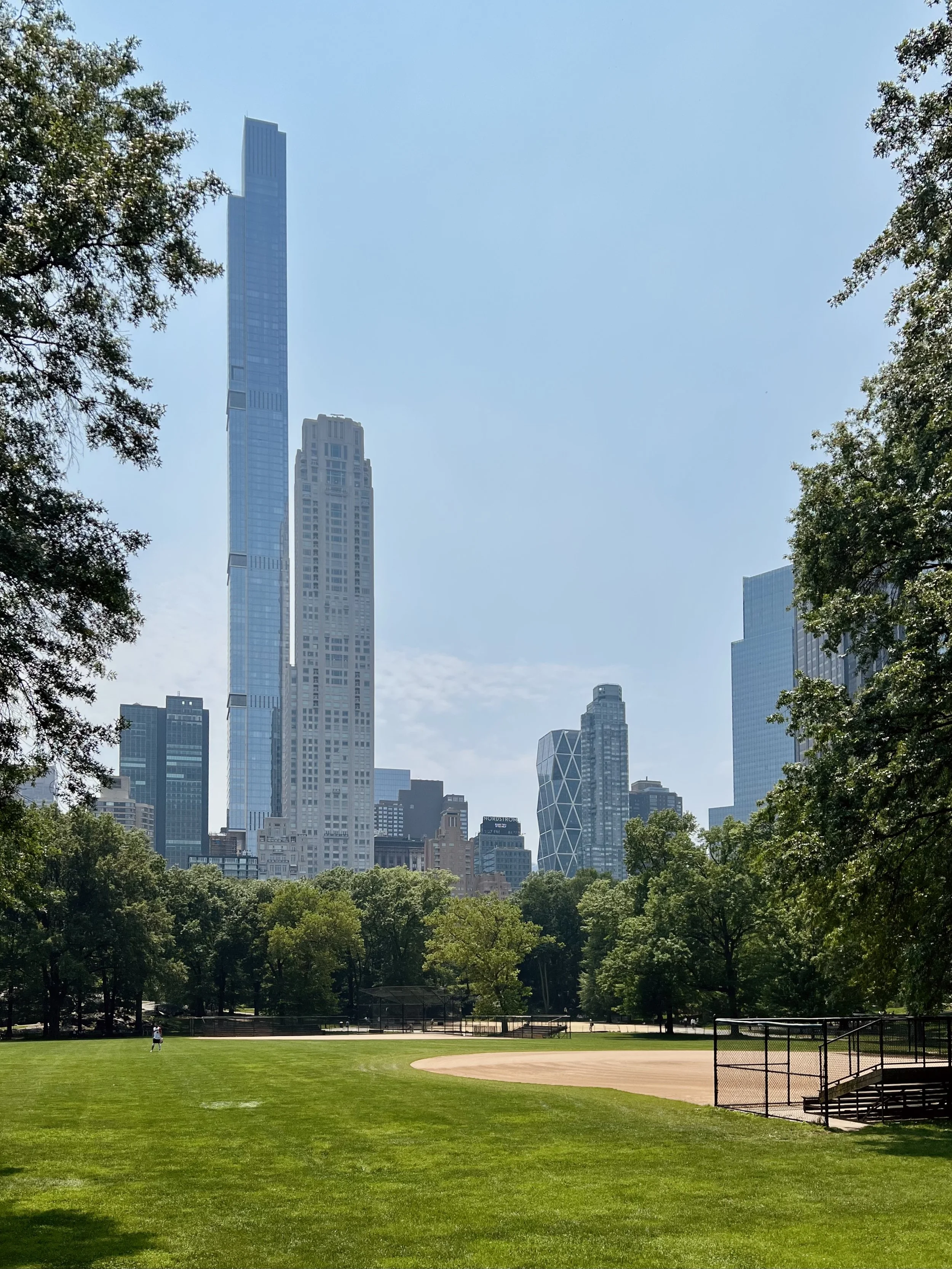
Central Park Photo Courtesy of the author.
New York City has a way of showing up in other cities—before you’ve ever been there. During my two-week stay in the city in May 2025, a strange thought kept resurfacing: I’ve seen this—or rather, felt this—before. Even though it was my first time traveling there, it was as if I was visiting a familiar place. Like encountering someone new, yet with the strange sense that our paths had crossed multiple times already in the past. New York City seemed stitched together from fragments of the Asian cities I’d visited, including those in my home country, the Philippines—traces of each subtly woven into its streets.
These connections weren’t coincidental. Many Asian cities, especially those shaped by post-war and post-colonial reconstruction, have adopted Western urban planning models. But walking through New York City itself, experiencing its scale, rhythm, and texture, felt like encountering the source code behind the cities I’ve known all my life. Not through direct imitation, but through architectural memory. Like underground roots linking distant cities—echoes of American influence that shaped my own cities and cities I’ve been to, now reflected back at me in their original form.
That sense of familiarity struck me most while walking through Central Park, where I couldn’t help but think of Baguio. Strolling beneath the canopy of trees, upon acres of manmade landscape, was like being in Burnham Park or Camp John Hay. Not because of specific landmarks, but the feeling of retreat, of curated nature pulsing through the intricate yet synthetic system of paths and trails. It validated that a landscape of this scale can really be crafted with bare human hands.
That impression deepened as I ventured further west, along the Hudson Yards. The open walkways and contemporary urban landscaping had an uncanny resemblance to the business districts in Makati and Raffles Place.
Buildings and structures like the Vessel and the Shed trying to outshine each other like architectural trophies clumped together, each begging for your attention.
The comparison extended to New York’s iconic street grid, especially in Midtown. The numbered avenues and streets reminded me of BGC’s planned geometry, that sense of order imposed on urban density.
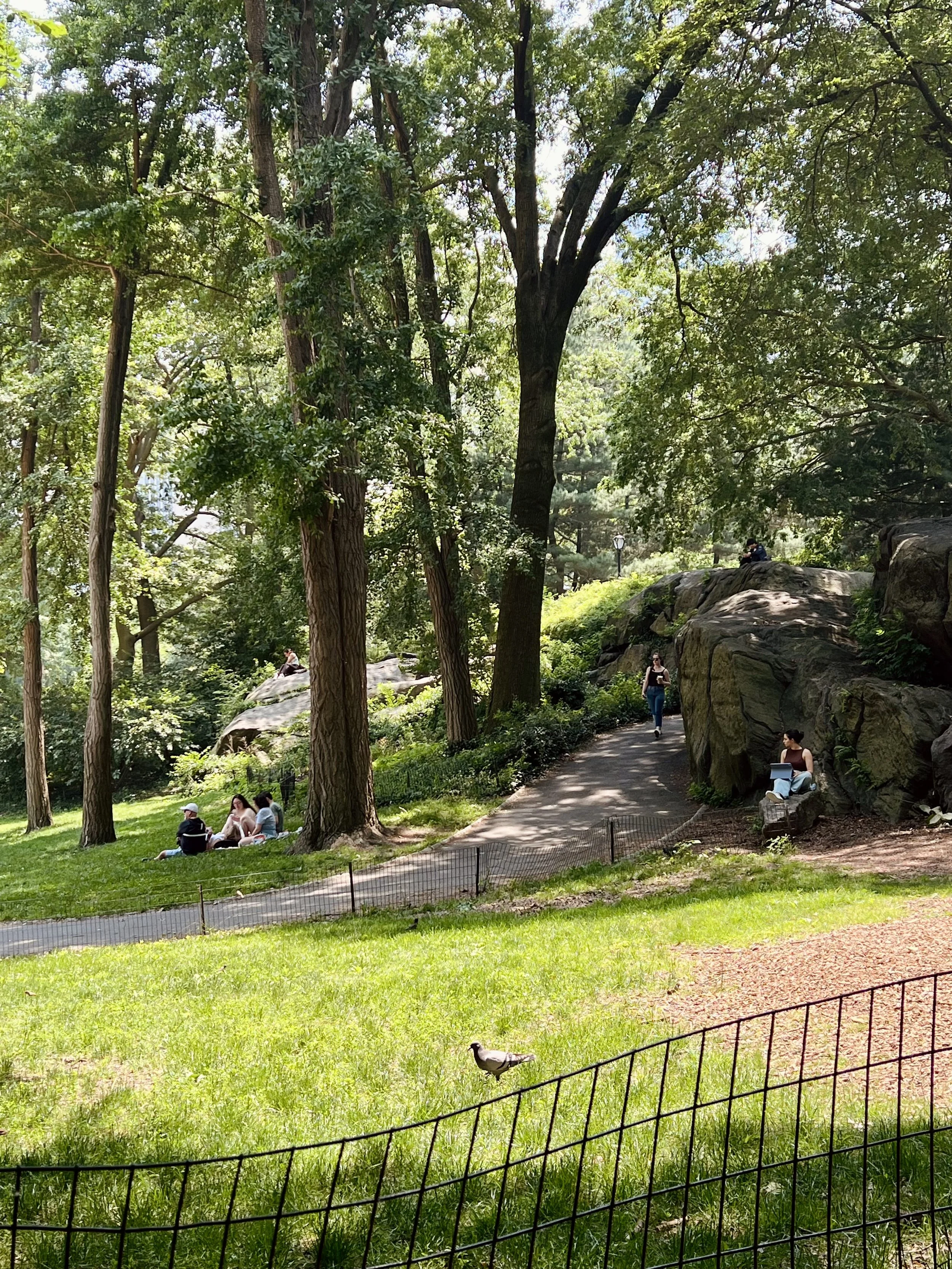
Central Park Photo Courtesy of the author.
The sense of déjà vu intensified at Times Square. Its glimmering LED advertisements and sensory overload transported me straight to Shinjuku. Neon reflections on wet asphalt, giant brand names screaming from screens above—it felt like a scene I’d already walked through elsewhere, just rearranged. But where Tokyo uses its lights with a kind of organized chaos, Times Square was brash and theatrical, unapologetically American in its scale and spectacle. Standing in the middle of it, bathed in giant ads and kinetic color, I didn’t just think of Tokyo, I thought of Orchard Road in Singapore and of Myeongdong in Seoul. Places where architecture becomes performance. Where public space is designed to capture attention before it invites reflection.
Then, amid all this height and spectacle, came something smaller, more human-scaled: the street vendors. Informally set up on corners or in subway corridors, some offered sliced fruits, candies sold per piece, and spontaneous music. It brought me back to my college days, walking along P. Noval and España Boulevard and grabbing a snack or two from a makeshift kariton before attending the next class. These improvised economies are rarely mapped, often overlooked—yet they’re vital threads in the city’s hidden anatomy.
Beyond the sentimental, a thought crossed my mind: perhaps the International Style is the thread that stitches these memories of places together. The late 20th and early 21st century steel-and-glass high-rises—buildings that could belong to any city in the world—might be why I so easily connected them to Hong Kong’s business core or the corporate districts of Kuala Lumpur.
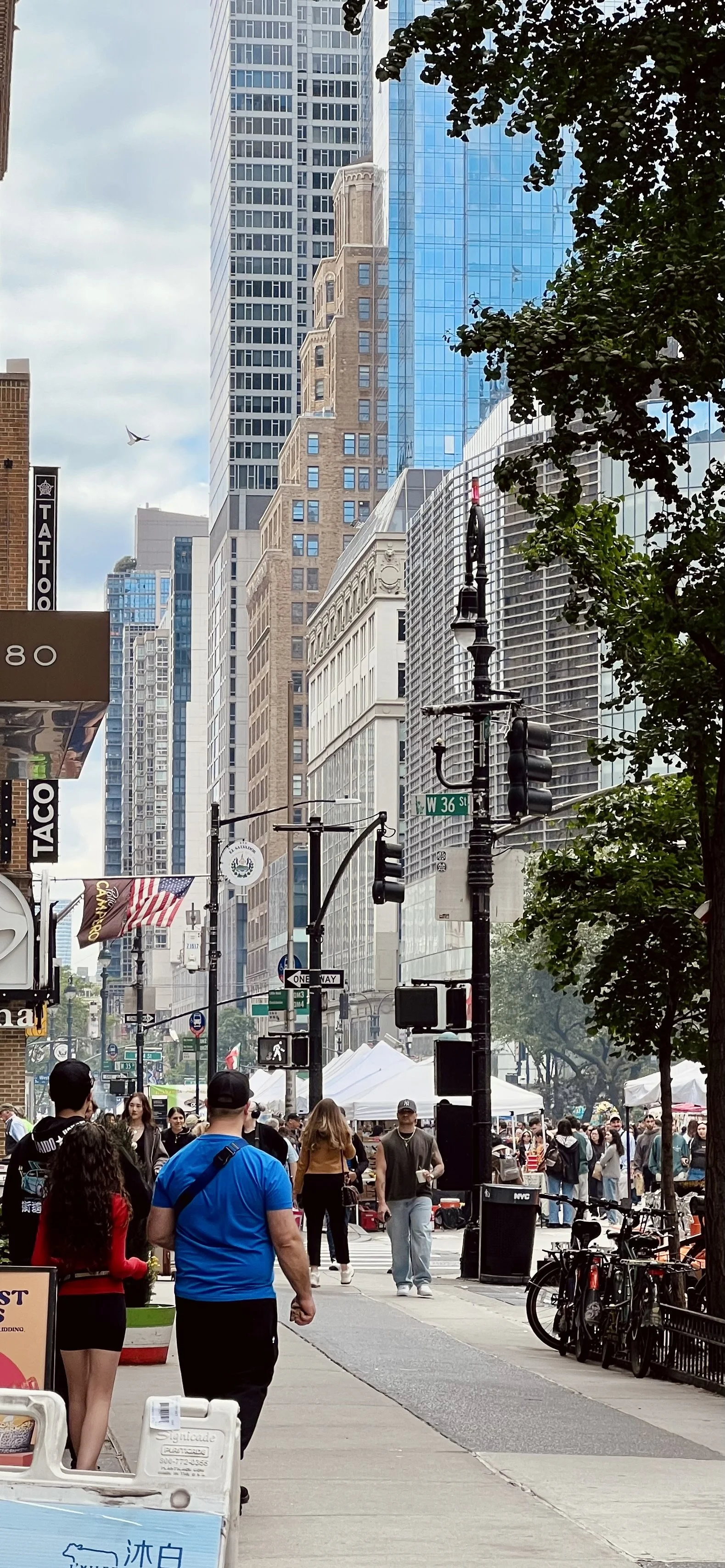
New York City Skyscrapers Photo Courtesy of the author.
Their presence also made me think of Manila’s own growing skyline: how we are still adopting similar forms, similar facades, perhaps chasing the same aspirations.
In those two weeks, I came to see New York City not just as an architectural capital, but as a living archive—an urban organism quietly reflecting pieces of cities I’ve known. It made me realize more deeply how urban design shapes not just skylines, but memories.
New York City didn’t just give me a new appreciation for global architecture, it helped me see my own experiences and impressions in a different light. In its soaring towers and hidden corners, I found echoes of home. I wasn’t just traveling through a new city. I was moving through a palimpsest of other places—filtered, reframed, and partially concealed—stitched into an evolving organism and reflecting back in forms of obscured memories.
In memory, places shift no less with reference to each other, they also merge with other places. One place is therefore always present in another, […]. - Van Eyck, (1962)