

Billy Shire on Lowbrow and his LA-based gallery LA LUZ DE JESUS
By Zara Kand
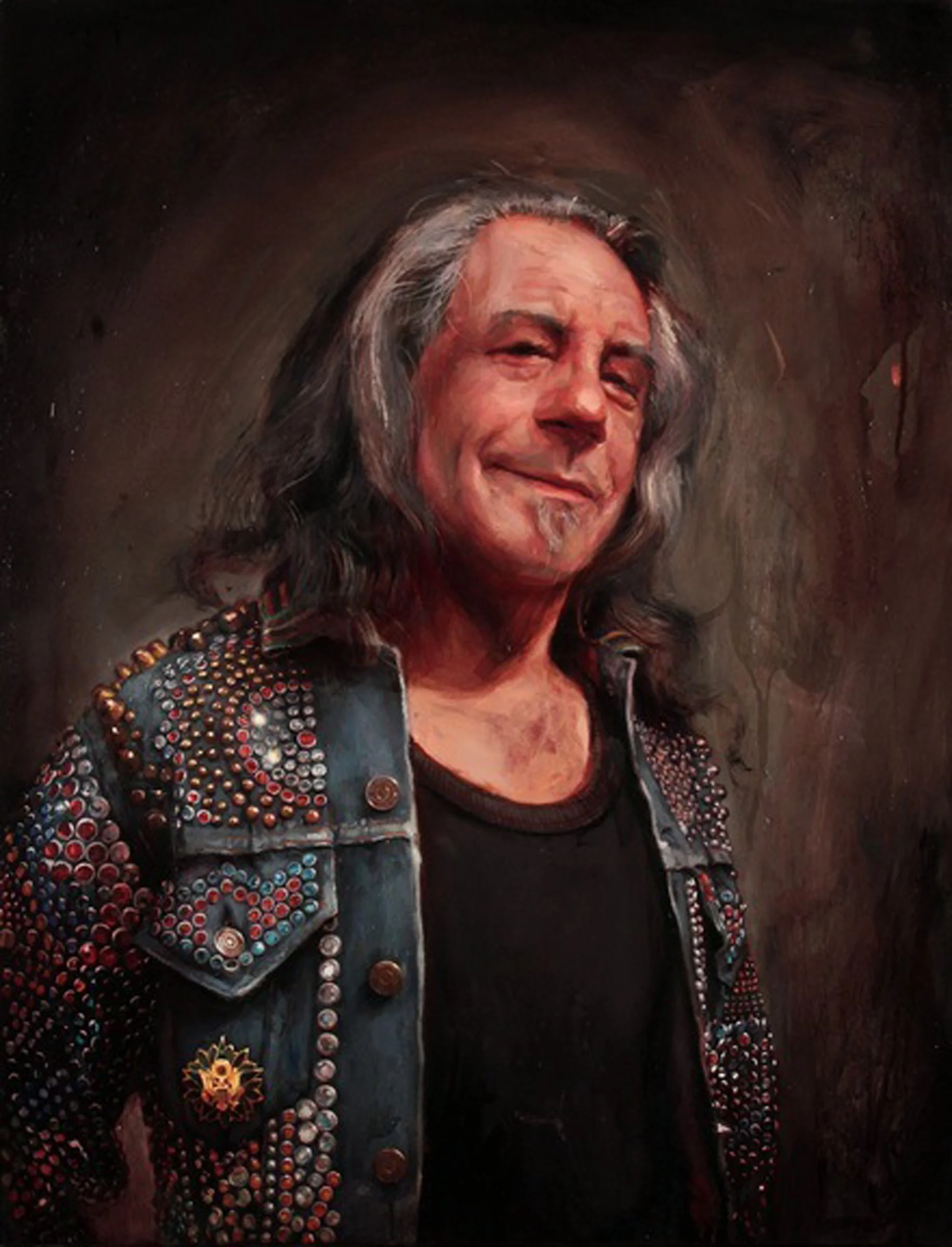
Billy Shire by artist Shawn Barber
Anyone with a deep appreciation for Lowbrow art, aka Pop Surrealism, has probably come across the name Billy Shire. As one of the movement’s prime facilitators, his involvement goes all the way back to its genesis in the mid/late 80s, when such expression would have been considered crude and unsophisticated. This unique subculture was — and still is — inspired by folk and outsider art, underground comics, hot rod cars, cartoons, religious iconography, and anything too strange for the mainstream. Shire helped foster Lowbrow art into the immensely popular scene it is today, giving home to artists whose talents may have otherwise fallen through the cracks. His infamous gallery La Luz de Jesus, housed within Wacko Soap Plant in Los Feliz, California, continues to showcase Lowbrow artists, from renowned art stars to emerging talents.
Despite his reputation as a legendary art collector and entrepreneur, Shire has managed to keep a rather old-school, punk rock, and humble spirit — one that is motivated by his genuine love for art and helping artists thrive in a world where odds are often piled against them. Here, he provides us with a bit of backstory about the Lowbrow/Pop Surrealism movement, how he came to be involved, and his thoughts on where it stands today.

La Luz de Jesus installation view. Courtesy of Zara Kand.
ZK: Being the leading expert on Lowbrow culture that you are, could you give us just a brief history lesson on how this art movement began?
BS: In my view, there were several events that spawned the Lowbrow movements, and they all involved Robert Williams (henceforth known as the father of Lowbrow), who, as a matter of fact, coined the term Lowbrow (supposedly he copyrighted it, but that might be urban legend). The first was a Robert Williams show sponsored by a loosely affiliated group calling themselves the Art Boys circa 1985. I did not attend this; I believe it was in a little storefront on Hoover Street in Silverlake that was rented for the occasion. The second and seminal real beginning was the "WESTERN EXTERMINATORS SHOW" at the Zero One Gallery run by John Pochna, featuring work by Ed "Big Daddy" Roth, Robert Williams, and Gary Panter. This was sometime in early 1987. Interestingly enough, I have not been able to find any information on this groundbreaking show anywhere. I had just opened La Luz de Jesus Gallery in October 1986 and was showing folky, self-taught art, but I had a lot of punk-influenced art friends like Gary Panter and Neon Park, the latter of whom I consider the grandfather of Lowbrow art. I began showing these artists — La Luz was essentially the only gallery consistently exhibiting them. From there, a scene and movement developed, and it became known as Lowbrow, and later, Pop Surrealism. Also, be aware that at this time there wasn't the plethora of galleries around that there is today — much less as many artists, especially those painting in minimalism, abstract expressionism, conceptual art, etc.
ZK: What was it that initially attracted you to Lowbrow art on a personal level, and how did you come to be involved as a major facilitator?
BS: What attracted me to Lowbrow started out with bringing friends that didn’t have any place to show. It also had a lot to do with the representational and narrative subject matter of the work. The original Lowbrow artists were influenced by Pop Culture — particularly California culture of the early 20th century. And popular culture has been what my stores Soap Plant and WACKO have always done. So I started to bring in artists affiliated with Zap Comics, which was very inspirational to me in my teen years, through Robert Williams. So, it happened very organically that the artists came to me and dovetailed with what I was already doing. Being pretty much the only one around pushing that art form, I became very influential.
ZK: Lowbrow art is also commonly referred to as Pop Surrealism. Would you mind clarifying what the difference between these terms is?
BS: Lowbrow and Pop Surrealism are essentially the same thing. Pop Surrealism was coined by Kirsten Anderson, who runs Roq La Rue Gallery in Seattle, and technically is a better description for the art movement. Because of the art and artists lumped into Lowbrow/Pop Surrealism, it’s just plain impossible to really classify all of them under one banner. To me, the term Lowbrow was meant to be the antithesis of Highbrow and was highly informed by mid-century illustrative arts, comics, cartoons, tattooing, sign painting, and pulp covers. Also influential was California culture, surfing, hot rodding, and Mexican kitsch. Pop Surrealism is, in my view, a more encompassing term, allowing for traditional and classical influences. It’s just a matter of taste which term you use, but for many years neither of them really covers the full range of artists and art lumped in under either term.

La Luz de Jesus installation view. Courtesy of Zara Kand.
ZK: Then there’s also the more recent, broader term “New Contemporary Art,” which Hi-Fructose Magazine’s Annie Owens describes as, “…a catch-all phrase for art from the mid-2000s on that doesn’t fit between lowbrow and contemporary living room art.” Regardless of what we choose to call it, why do you feel this form of expression still holds so much relevance today?
BS: At this point I don’t know what’s relevant in the “Art World,” because I have never really looked at what I do as a “business.” When I started the gallery, I wanted to disrupt the business aspect of art. Unfortunately, the art world is not the tech world and I haven’t changed any of the way the business is run, but maybe a little of the way art is looked at, and to me that’s very much the relevance of art to the individual... the way it’s looked at and appreciated and if it can sometimes change things for the better.
ZK: Are there any particularly memorable or gratifying experiences you’ve had in dealing with the Lowbrow community? And on the contrary, have you faced any challenges as a gallerist that you care to share?
BS: The gallery and I have had some crazy times — from being picketed by the Christian right to having the Naked Trump (look it up) in the gallery. There was also the time I walked into the gallery one Sunday and found Neon Park hunched in the corner, blazing on acid; or being busted by the fire department because an artist who wasn’t included in a show reported us; and the cops wanting to shut us down because the Dwarves were playing at 120 decibels in the parking lot.
ZK: What a hoot! Yes, I remember the street art collective INDECLINE had planted a rather unflattering statue of Trump at La Luz de Jesus just before his first term, which received a lot of press at the time.
Lastly, what’s currently shaking over at La Luz de Jesus Gallery?
BS: We have a mixture of artists showing in the gallery right now. There is a two-person show called “Charmed & Dangerous” by mixed media artists Alea Bone and Stephanie Brockway; there is a solo show “Primal Odyssey” by painter Craig Laratonda; another solo show by assemblage artist Wendy Gadzuk called “Love Languages”; and finally “Pony Rides” by watercolor artist Sea Monster. Coming up next will be our large annual group show “Everything but the Kitschen Sink,” in July and August (of 2025).
In the future, we will be doing a lot of the same thing, but a bit differently. Challenging the status quo, especially the current cultural climate of conformity and conspiracy in the arts and the “Magaverse” (in the United States). I want to broaden the artistic dialog, not diminish and dilute it. To this end, we will be doing a lot of group shows by artistic discipline, not by theme. Also, we will be working with arts collectives, and of course showing young and unknown artists.